








August
2026
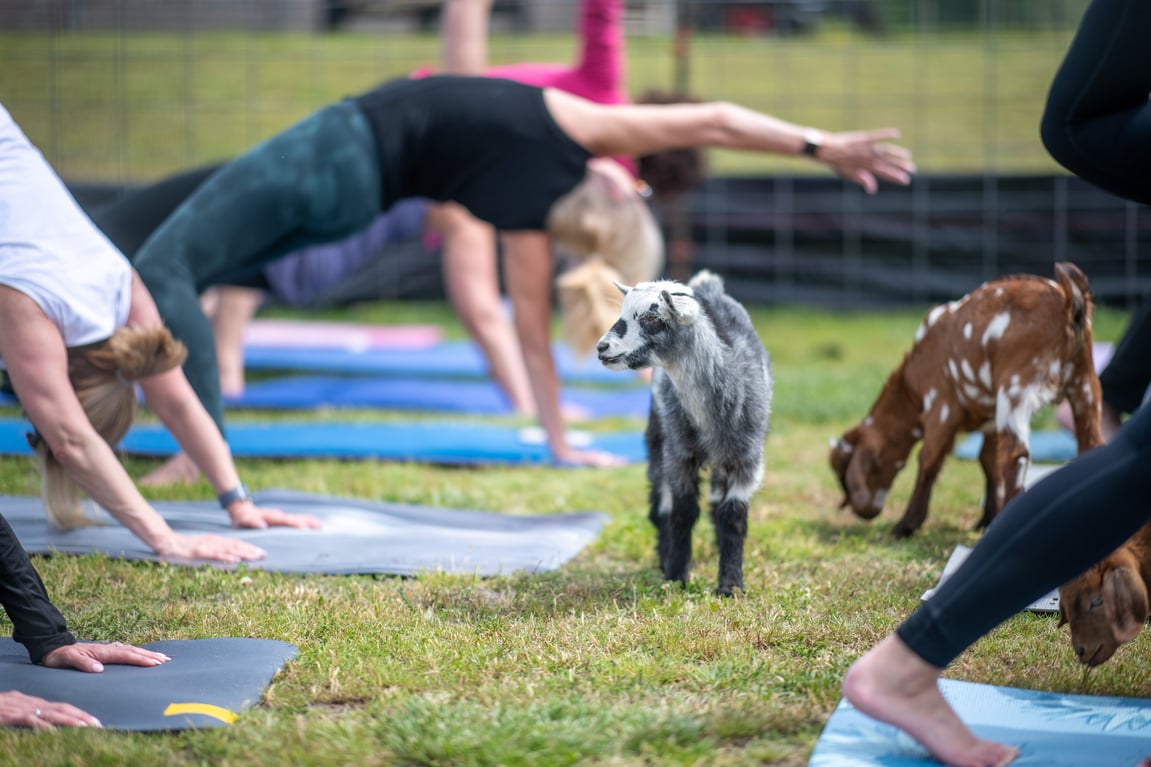
Are you interested in bringing goat yoga to your hobby farm? This popular agritourism offering is a great way for your property to generate extra income while giving the community a fun, snuggly health and wellness option.
“Namaste.” A common phrase gently expressed before and after a traditional yoga class. Over the years, yoga has expanded beyond the studio into more nontraditional environments like office spaces and even farms.
There’s puppy yoga, cat yoga, yoga on paddleboards, yoga while hiking, sunset yoga and yoga on the beach, just to name a few. Among the most popular, though, is goat yoga.
Goats are friendly creatures that many homesteaders raise on their property. They’re commonly used for their milk to make farm products like cheeses and soaps. Beyond product and food production, goats are a big draw to farms and homesteads – especially those that provide experiential offerings like goat yoga. Over the years, goat yoga has gained steam and is among the most popular, most sought-after farm experiences, making it an excellent way for hobby farmers to generate additional income.
Sarah Kosteva, marketing director for Black Star Farms, a 160-acre winery estate in Suttons Bay, Northwest Michigan, says goat yoga was a vision from the farm’s Managing Owner, Sherri Fenton.
“At the time, we were already offering yoga classes to our inn guests,” she explains. “Sherri thought the idea of goat yoga was the cutest thing, so I took her dream and made it happen.”
What started out fairly small took off, becoming one of the most popular programs the farm has offered: “It became very popular. People crave experiences they can share with friends and family. Goat yoga gets you outside – something that parents, kids and girlfriends over bachelorette weekends can all enjoy together.”
If you’re thinking about bringing goat yoga to your hobby farm or homestead, now is the perfect time! In this article, we’ll cover the basics so you can open and run a successful program for your community, too.
So, put your yoga pants on and grab your mat (and goats!), and let’s learn how.
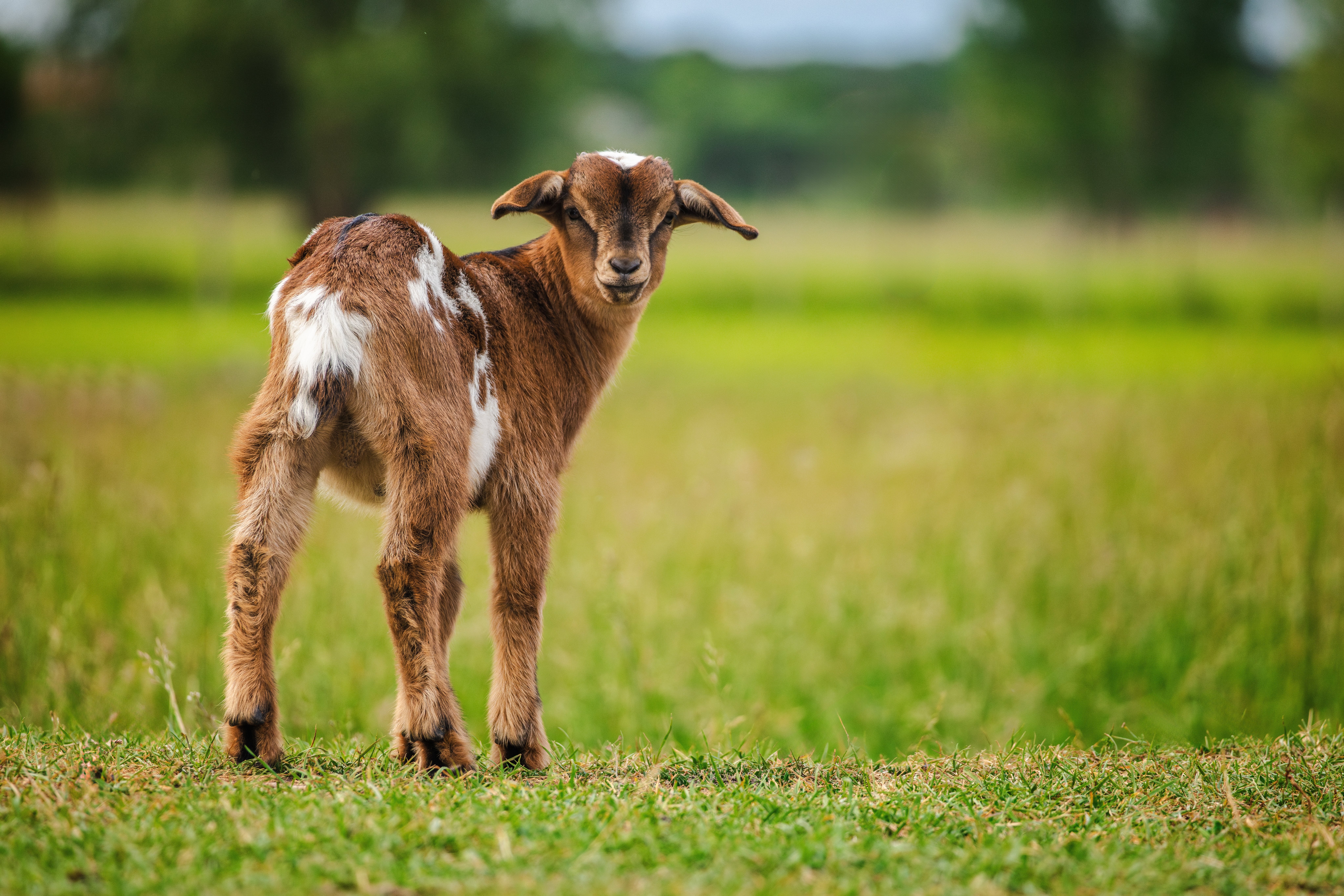
Step 1: Be An Animal-Loving Property
The first, and most obvious, step is to be a farm or homestead that raises and cares for goats.
“At its core, you have to be an animal-loving estate,” says Sarah. “This includes caring for the animals and keeping their health and safety in mind.”
Goats have very sensitive stomachs, and despite common misconception, they can, and will, eat anything. But they can’t, and shouldn’t, eat everything due to their sensitive stomachs. Sarah stresses researching and understanding what goats can and cannot eat in order to provide them with an adequate, balanced diet.
In addition to diet considerations, a safe, comfortable home and shelter are equally important.
“When I bring new baby goats to the farm, there’s always the fear of predators, especially at night. We’re on a farm, out in nature, where animals like coyotes pose a threat. So, it’s important to make sure that the goats are safe.”
Learn more in How to Raise Goats on a Hobby Farm: A Complete Guide.
Step 2: Incorporate The Right Type of Goats for Goat Yoga
For the past two years, Black Star Farms has only raised Nigerian dwarf goats, an excellent breed choice for goat yoga offerings due to their small size, friendly personalities and quick, light movements.
“It’s the perfect variety of goat,” Sarah shares. “I found a really nice family-owned farm up in Rocky where I adopt from.”
According to Sarah, goats are primarily bought and sold to farms to produce milk products like goat milk and goat cheese. Because of this, the females are more valuable and more expensive. Sires, or intact males, are also valuable, as they are used for mating.
Nigerian dwarfs are the top choice for a goat yoga program, but there are a few other breeds to also consider:
- Pygmy goats: A small breed that’s easy to care for and handle. Like the Nigerian Dwarf, Pygmy goats are very social, curious and love people.
- Young Nubian goats: Baby Nubian goats are great for goat yoga because they are calm and loving. Great for use in a gentle or yin yoga-focused class.
- Kinder goats: These goats are a cross between the Pygmy and Nubian. Babies and kids are small, active and playful. This breed is a fun addition to goat yoga, as they’ll enjoy hopping onto backs or crawling into seated laps.
Step 3: Find a Yoga Instructor
Next, find a certified yoga instructor in your area to teach the class. Ideally, this person holds an RYT certification, has current liability insurance and loves people and animals.
To check all of these boxes, Black Star Farms has an existing partnership with a local yoga studio in town. The farm has worked with them in the past for offerings like Yoga in the Vines and private yoga classes for inn guests. This relationship provides them with advanced certified yoga instructors who “know what they’re doing.”
“These instructors have taught many classes, so it was an easy transition for them to take a yoga routine and use it with the goats,” Sarah adds.
Before class begins, all participants must sign a waiver.
“The form basically states that these are animals. They do animal things like walking on you, chewing on a piece of clothing and that they might poop or pee on your yoga mat,” Sarah says. “We’ve never had any issues, but it’s always best practice to include a waiver.”
A Goat Yoga Class Example
To teach a goat yoga class, Sarah says it should be a nice, healthy combination of regular yoga instruction. This includes a good mix of standing poses, supine (lying) and stretching poses. She also encourages yoga teachers to infuse their own unique teaching style into the classes.
“We’ve had yoga instructors bring musical instruments or sound tools, stereos, props and their own twists to the class. Our classes generally flow through 45 minutes of dedicated yoga instruction and 15 minutes of snuggles and goat selfies,” Sarah says.
From an instructor’s point of view, to engage both the participants and the goats, and to keep everyone safe, I would recommend a mostly seated, hands-and-knees-based flow as the primary portion of the class – because the purpose of goat yoga is the experience and interaction with the goats.
Depending upon the type of goat breed you’re including in the class, supine poses should be used in moderation or left completely out in my opinion. Instead, you can end the class with a seated meditation instead of Savasana. – Mara, RYT 200
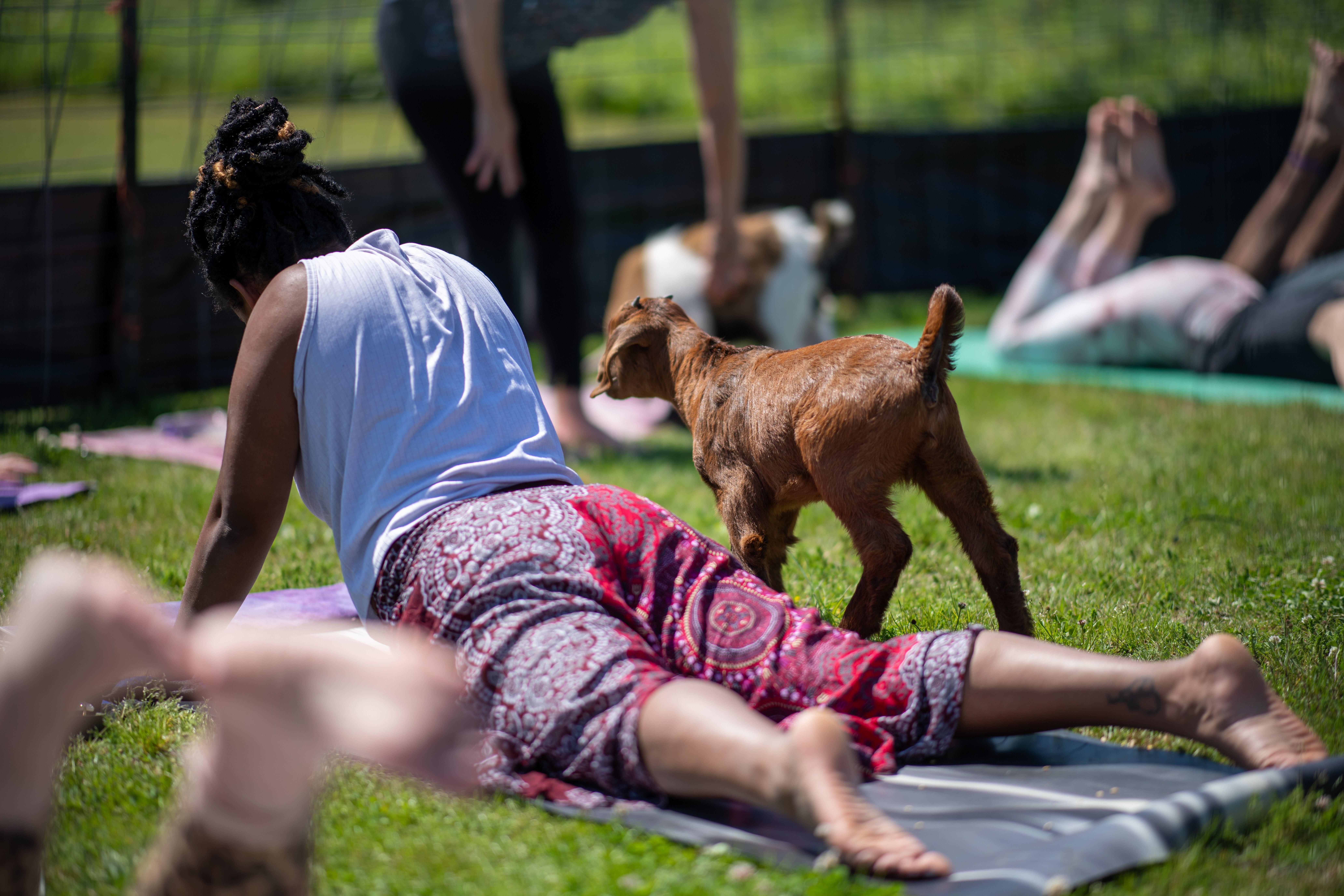
Here’s a sample goat yoga class:
Seated Meditation & Breathing (~5 minutes)
Seated Stretches (~10 minutes)
- Neck rolls from side-to-side
- Arm flows - inhale arms reach up, exhale arms down by the side (do this several times)
- Seated side stretches
- Seated twists
- Lotus hip stretches: Sit criss-cross apple sauce, plant the glutes into the ground. Inhale, and as you exhale, reach the hands forward, towards the ground until you feel a nice gentle stretch in the glute. Inhale to a neutral seat, switch the cross of the legs and repeat.
Hands & Knees Poses (~15 minutes)
- Cat/Cow: This is a fun posture that encourages the goats to hop on people’s backs.
- Needle flow: Move participants through Cat/Cow, exhaling into Child's Pose. Repeat the flow several times, ending in Child's Pose for a few breaths.
- Child's Pose side stretches
- Puppy pose
- Cat/Cow to Downward Facing Dog: Downward Facing Dog pose is a favorite pose in goat yoga! The goats enjoy running about, jumping off backs and running through the “human tunnels.”
Standing Poses (~10 minutes)
- From Downward Facing Dog, come to a standing fold. Move participants through a few breaths of flat backs, ending in Mountain Pose.
- Stand in Mountain Pose for a few breaths
- Tree Pose - this is a fun pose to test balance while the goats curiously explore and jump up on the legs for pets.
- Move through a Sun Salutation A, ending in a Child's Pose for a few breaths.
Seated Meditation and/or Savasana (~5 minutes)
Step 4: Open Up for Business
The last step is to schedule and begin offering goat yoga classes. This will include marketing your classes online and throughout the local community. A few marketing tips include:
- Design, print and post event flyers on community boards. Be sure to include how to register for the classes, pricing, and important items to bring (yoga mat, water bottle, etc.).
- Post about your classes on social media and your website.
- Have an email newsletter? Send out an e-blast featuring your new goat yoga classes.
- If you partner with a local yoga studio, ask them to share about your classes with their students.
- Share your event with local Airbnb owners, hotels and inns as a fun, local option for guests.
The more you get the word out, the better attended your classes will be. And, as Sarah mentions, once someone tries goat yoga, they leave grateful that they did.
“Goat yoga is such an amazing, fun event and experience. It’s impossible to leave without a smile,” she concludes.
Looking For More Creative Ways to Make Money From Your Rural Land or Farm?
Click the image below to download our free eGuide:

Your email address will not be published. Required fields are marked*