




Curious about making ultra-trendy tallow skincare products like face cream, lotions and lip balm at home? We talked to Blue Sky Tallow Co. co-founder Kristin Young for the basics on making your own beef tallow skincare products.
Tallow skin care products are having their moment in non-toxic living, homesteading and clean skincare circles.
So why are beautiful people so excited about slathering beef fat on their skin?
Although it may sound weird, tallow skincare aficionados, like Kristin Young of Blue Sky Tallow, say natural beef tallow is an amazing, sustainable, ancestral and locally sourced ingredient that’s excellent for all skin types.
It’s also a fantastic ingredient for DIYers passionate about natural ingredients, regeneratively raised beef and a seed-oil-free lifestyle.
In this article, Kristin shares her advice on sourcing, processing methods and a basic how-to for making your own tallow base to create simple, preservative-free creams, balms and lotions you can use yourself, or even sell as a value-added homesteading product.
How Tallow Transformed Kristin’s Skin & Led to the Creation of Blue Sky Tallow
We hear endless buzz about how the latest antioxidants, peptides, plant oils, detox cleanses and high-tech skincare gadgets can fix our skin.
But for Kristin, the transformation came from eating more animal products and switching to beef tallow for skincare.
“I was a pescatarian for 20-something years, and I always had difficulty with breakouts and skin health. I had numerous people tell me that eating animal products would help with those issues.”
Although initially opposed to the idea, Kristin eventually decided to switch to a diet of animal products.
“It made such a huge difference in my skin health, which was crazy.”
Impressed by her results, Kristin started cooking with tallow and came across information on its skincare benefits.
“I just started using it as a lotion for my legs and a little bit on my face, and that gave me the idea to make some tallow products infused with herbs and other natural ingredients. As a new mother, I was looking for something to do for extra income, and so was my sister, so I said, "Hey, why don’t we start a tallow skincare company?”
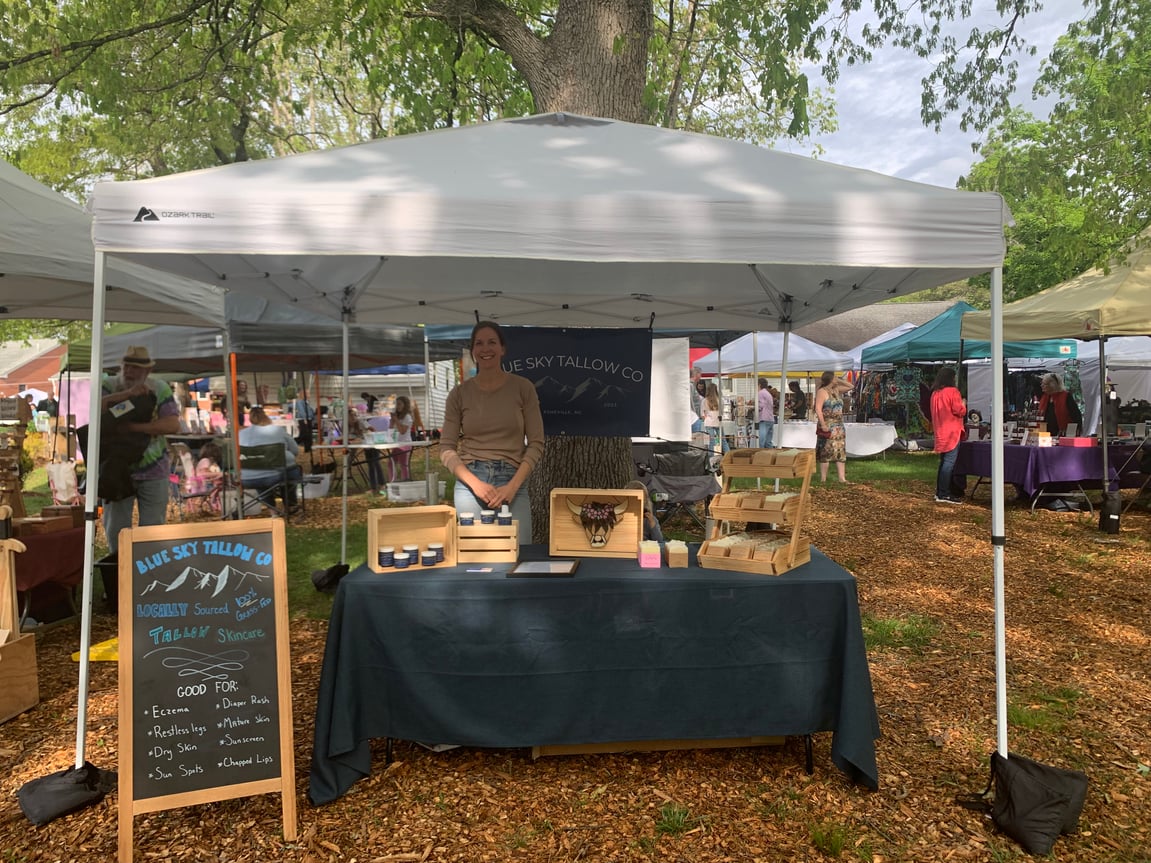
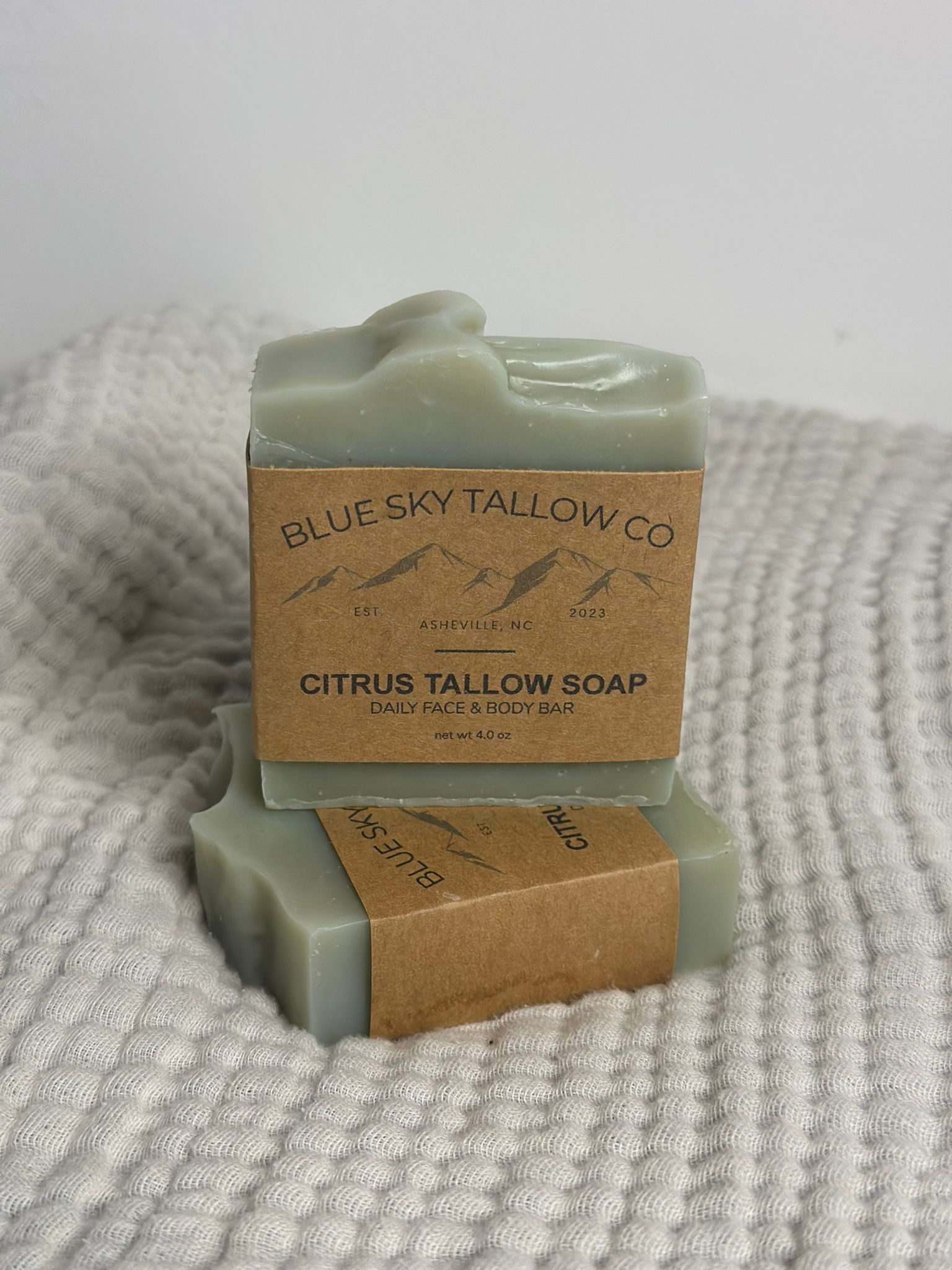
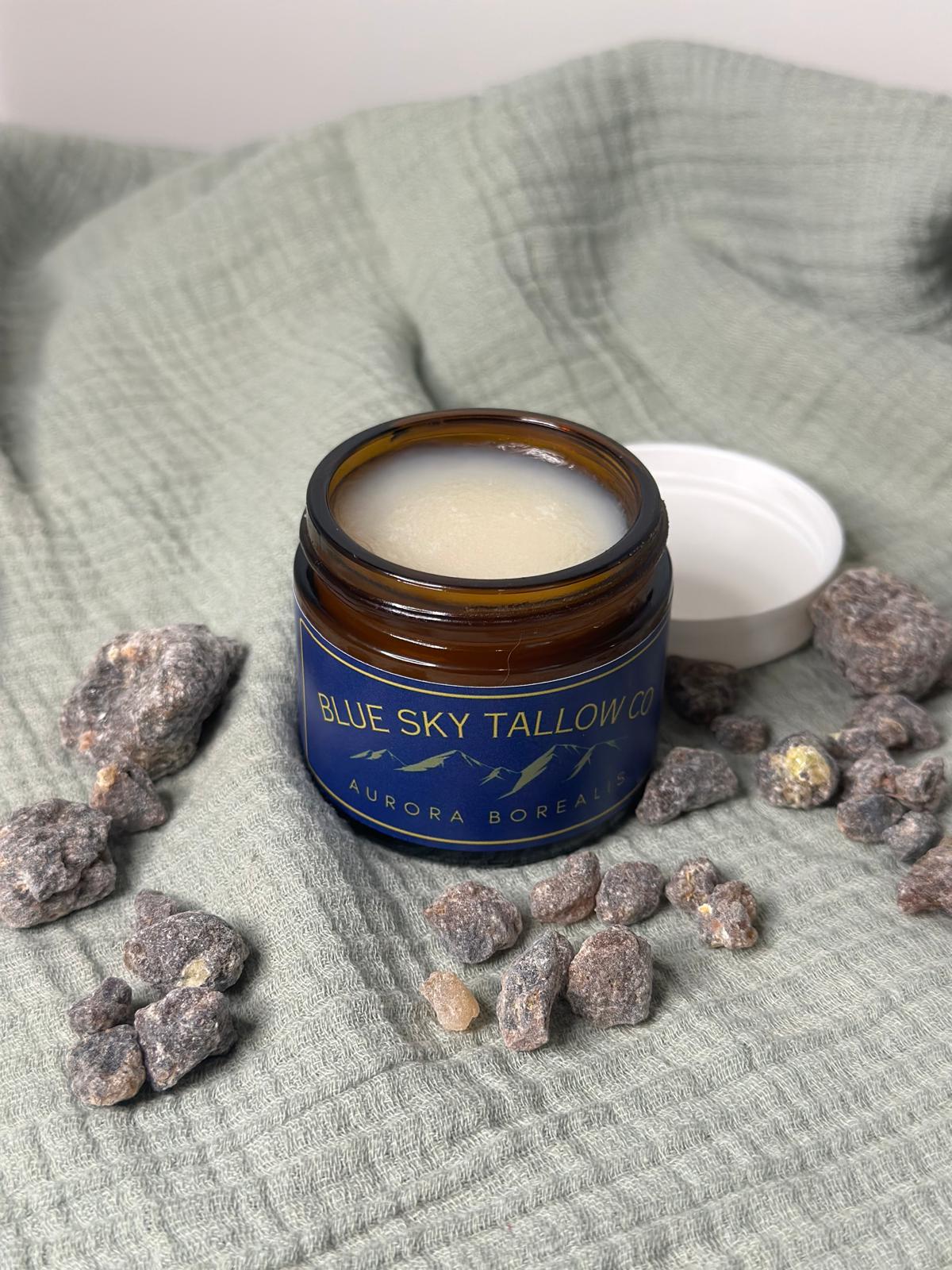
That was 3 years ago, and today Kristin and her sister own and operate Blue Sky Tallow, where they handcraft tallow face creams, body lotions, lip balms and more in microbatches using grass-fed and finished tallow and other locally sourced ingredients.
A Brief History of Tallow Skincare
For centuries, tallow, aka beef fat, was used as the base for homemade skincare products, including soaps, lotions, creams, salves, diaper creams and balms along with other household products like candles.
The reason was entirely practical; most people raised cattle for beef and milk, and, therefore, had plenty of tallow come slaughter time.
“It’s a very traditional ingredient, “ says Kristin, “People used to use it for everything. This was THE skincare product everyone used; we just got away from it because it’s an animal product and it was replaced with seed oils. So this is natural and normal and what our ancestors did.”
Those who oppose using tallow often cite the fact that factory farms, where most cows are raised, are terrible for the environment. This is true. However, Kristin points out that they only use and recommend using grassfed and grass-finished tallow from farmers who employ regenerative organic principles.
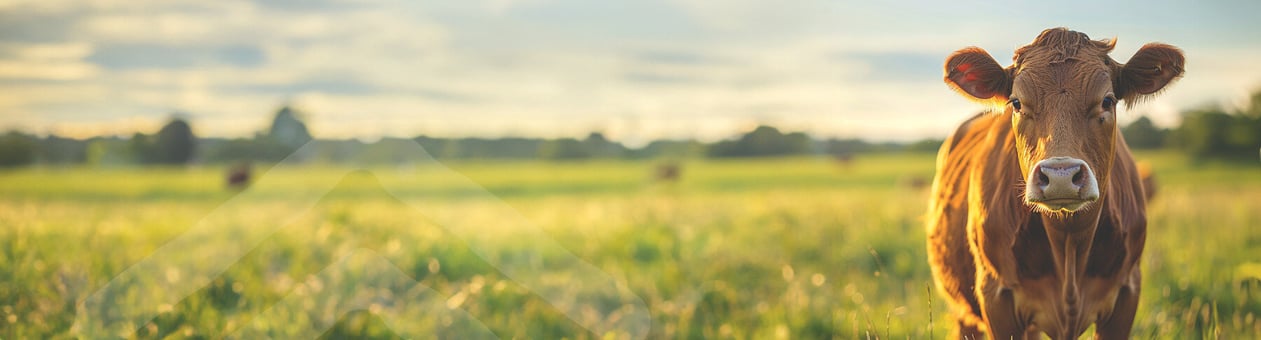
Regenerative organic farming and animal husbandry, also known as grass-farming, is a method shown to actually benefit the earth by focusing on restoring and maintaining soil health while honoring animal welfare, needs and instincts (in this case, the ability to graze outside in the fresh air), thereby reducing carbon output and emissions.
Tallow is making a comeback, and you can find it in local farm stores, online and in natural foods markets.
The Benefits of Beef Tallow for Skincare
According to Kristin, tallow is one of the most versatile, easy-to-use, nourishing and gentle skincare ingredients available.
“Tallow is very easily accepted by most skin types, and it also has a ton of vitamins that nourish the skin. Our skin has natural sebum, and tallow acts very similarly to it, so our skin accepts it very well.”
She also emphasized that tallow is healing, suitable for all skin types and effective for various skin conditions: “People have healed their eczema using tallow.”
It’s also wonderful for babies, children and those with sensitive skin. “My sister and I have always had very sensitive skin that reacts to everything, so the whole goal was to gear everything we make to people with sensitive skin, so everyone could use it and benefit from it.”
Although some studies suggest tallow may clog pores, others suggest it won’t. Kristin and other tallow skincare experts maintain that tallow’s comedogenic (pore-clogging) potential depends on its quality, including how it’s refined and made into skincare products.
What’s the Best Tallow for Skincare?
It may be tempting to buy a bottle of premade tallow from the natural foods store, but, as Kristin explains, that may not be the best for skincare products.
“It’s kind of tricky because every company does things differently. So we’ve learned you have to render a certain way to get the smell out and to get a nice texture. Some tallow has more of a tallow smell to it, some is more soft and fluffy and some is harder and more solid. So really, for us, it was trial and error, because you just don’t know how the farm or company is making it.”
So, how do you find the best tallow? Kristin recommends finding a local farm and asking them how they process their tallow. “You want slow heating and natural cooling, otherwise it can negatively affect texture and feel heavy on the skin.”
They achieve this by slowly increasing the heat to high to prevent burning. Then, as soon as it melts, they remove from the heat and strain. The tallow is then cooled at room temperature to prevent the formation of large crystals, which can cause a waxy texture.
For their tallow products, they source grassfed and grass-finished tallow because it smells better, is more nutrient-dense and has a superior texture.
A Basic How-To for DIY Tallow Skincare Products
Ready to make your own tallow skincare products? It’s actually quite simple.
Kristin shares the fundamentals of rendering and making your own tallow products using tallow, jojoba oil and herbs.
If you’re using premade tallow, you can skip to the infusion steps.
Materials & Supplies Needed
-
Chunks of beef fat (if rendering your own tallow)
-
A good knife
-
A large chopping board
-
A large bowl
-
A meat grinder (KitchenAid attachment works fine)
-
A strainer
-
Cheesecloth
-
A crockpot or large electric turkey roasting pan
-
Distilled water (to avoid introducing minerals, impurities or pathogens)
-
Kosher salt
-
Herbs or essential oils of choice
How to Render Tallow
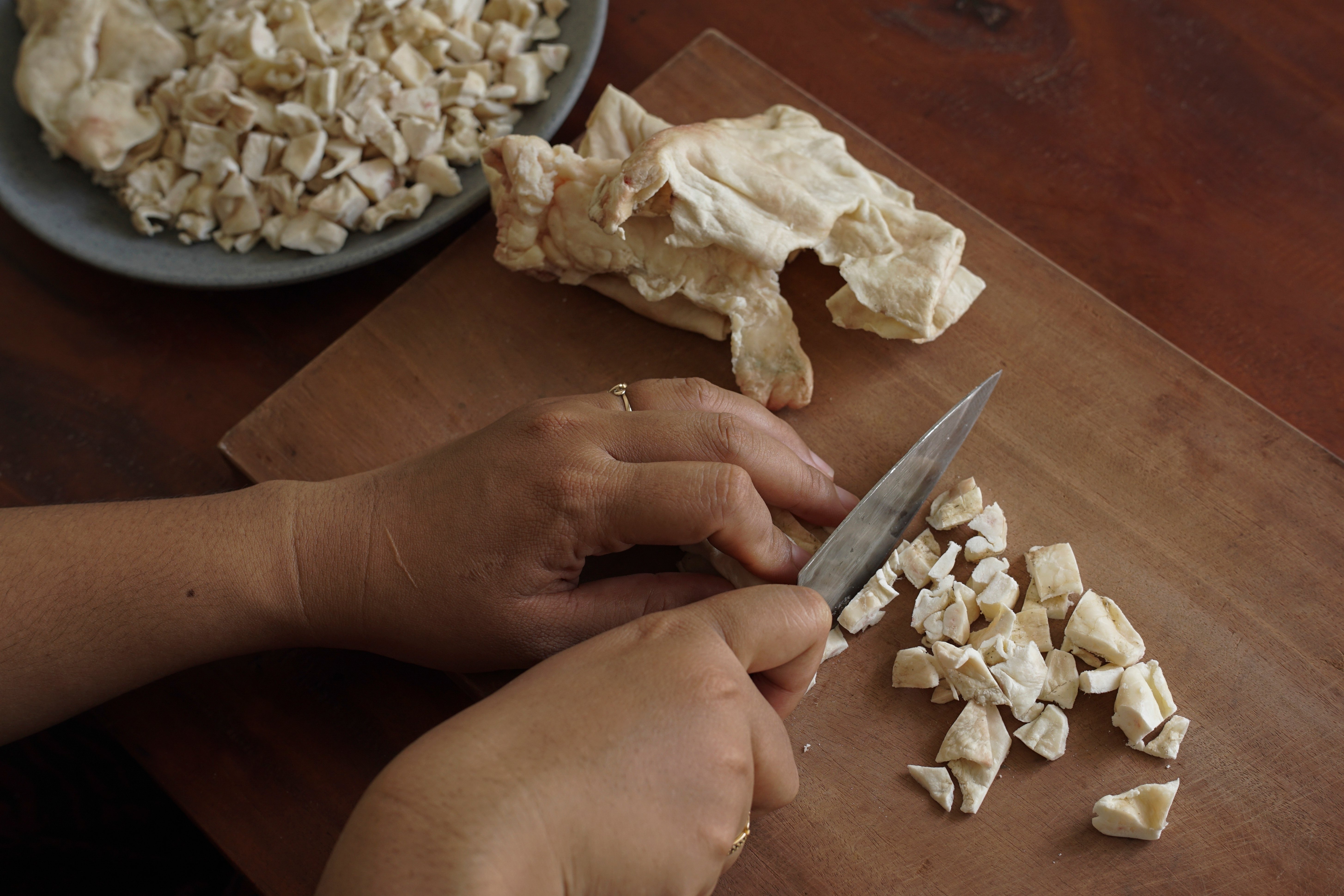
1. Using your knife and cutting board, chop the beef fat into small pieces, removing as much fascia and meat as possible. Then run it through the meat grinder.
2. Place in your crockpot or turkey roaster with enough water to cover the bottom of the pan, and let it render on low until it’s just melted, which takes about 3 hours.
Alternatively, you can do this in a deep roasting pan or Dutch oven in an oven set to 225 degrees.
Says Kristin, “We do the rendering process 3x to get more of a neutral smell and to get a better texture.”
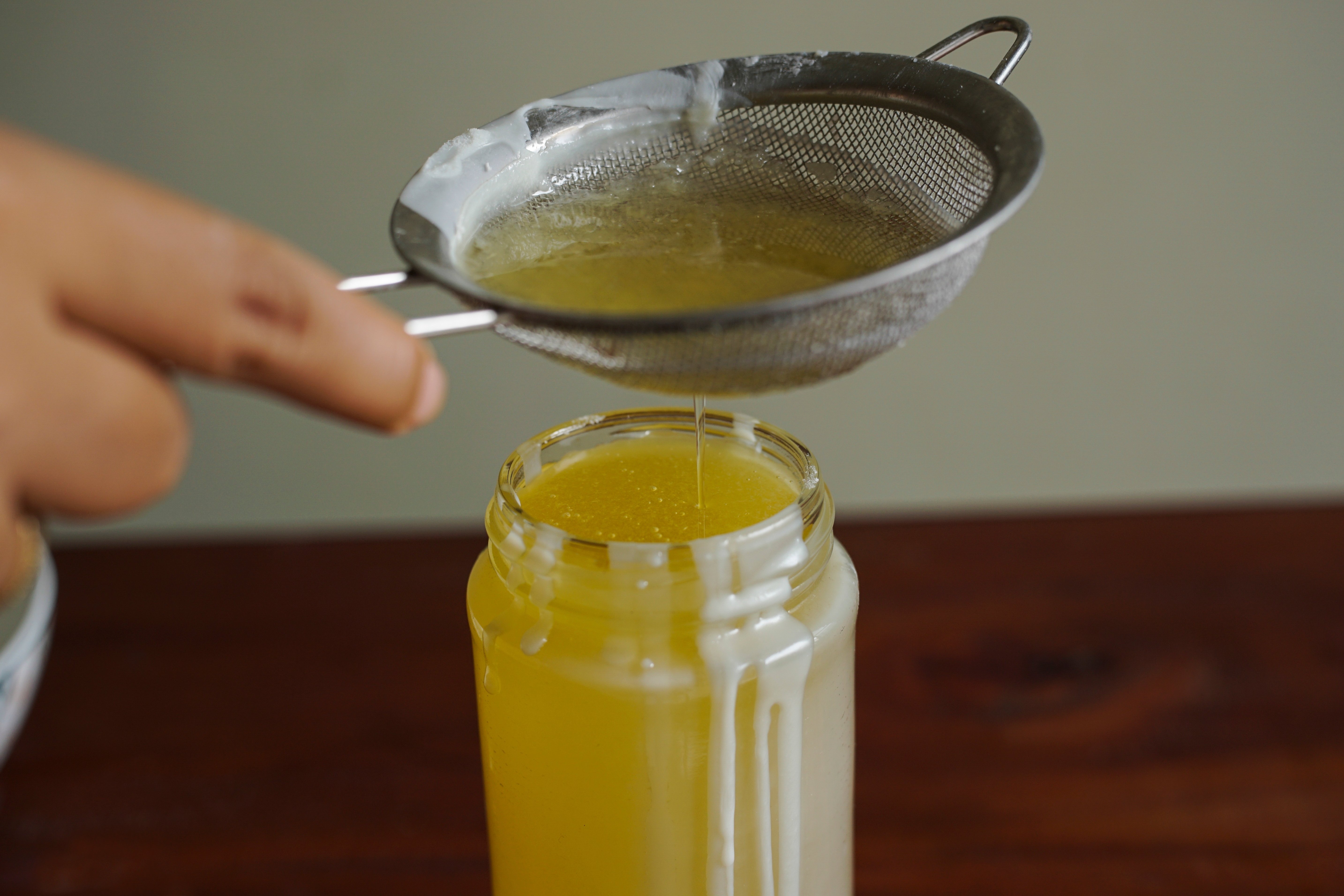
3. Strain using a strainer and cheesecloth, and allow to cool naturally at room temperature. Do not force-cool the tallow in the fridge or freezer, as this will negatively affect texture, making it heavy and/or grainy.
How to Make A Basic Tallow Moisturizer
Once your tallow has cooled, it’s ready to be transformed into a moisturizer.
Says Kristin, “The tallow is pretty hard when finished, so we add jojoba oil.” Jojoba oil, which also mimics skin’s natural sebum and provides complementary benefits, softens the tallow, so the more you add, the softer it becomes.
You can stop here for a basic moisturizer, or infuse your tallow with herbs and jojoba oil for targeted skin benefits and a totally natural, beautiful scent.
Some ideas for herbs include calendula, chamomile, lavender, rose, nettles, comfrey, tea tree and thyme.
Herbs are added directly to the hard tallow before the jojoba oil.
To add the herbs, Kristin infuses them into the hard tallow, then gently heats it, on as low as your crockpot or turkey roaster will go — just enough to melt the tallow. She lets the herbs infuse for several days to extract their natural scent and medicinal properties.
After the tallow is infused, strain the herbs, allow to cool naturally, then add the desired amount of jojoba oil to achieve the desired texture and consistency.
“You can also just use the infused melted tallow right away and add jojoba; you just don't want it to be too hot when adding the jojoba. We aim for around 120 degrees F.”
If you use essential oils, they are typically added as a last step to maximize their scent and potency (don't heat them like you would dried or fresh herbs).
Note: If clean beauty products are your goal, avoid synthetic fragrances due to their endocrine-disruptive properties.
Pour into clean glass bottles, label them, let them solidify and store in a cool, dry place, like a cupboard or medicine cabinet.
Says Kristin, “We don’t add preservatives or stabilizers, so ours lasts about a year. We do recommend getting it out using something other than your finger (like a small spoon), so you don’t introduce bacteria.”
Basic Tallow Body or Face Cream Recipe
Now that you know the process, here’s a basic recipe that provides measurements and step-by-step instructions.
This recipe starts with premade tallow (so if you’re rendering your own, see instructions above) and does not include dried or fresh herbs. If you’d like to add herbs, see above for instructions.
For this recipe, Kristin recommends adding about an ounce of dried herbs. “Lavender is a great one because the scent comes through really well.”
Ingredients:
-
1 cup organic grass-fed grass-finished beef tallow
-
3-4 tablespoons pure jojoba oil (experiment to find the best texture for your tallow)
-
5-10 drops of your favorite essential oil or 1 ounce of dried herbs
How to Make:
Step 1: Gently Melt the Tallow
Using a crockpot, electric turkey roaster or double boiler, gently melt the tallow on low heat, stirring occasionally, until it liquefies.
Alternatively, you can melt it in the oven at very low heat (200-250 degrees) in a roasting pan.
Step 2: Add the Jojoba Oil and Essential Oils
Remove from heat and let cool naturally until it reaches room temperature, about 10-15 minutes.
Next, whisk in the jojoba oil and optional essential oils (if desired) until combined.
Step 3: Pour into Containers & Store
Pour the mixture into containers and let harden naturally. Store in a cool, dry place for up to 1 year.
How to Find Blue Sky Tallow Products
If you’re interested in trying out Blue Sky Tallow Products, you can find them online at: Blueskytallowco.com.
For locals or visitors to the Western North Carolina or Asheville area, you can find Blue Ridge Tallow products at the North Asheville Farmer’s Market once a month and the Black Mountain Tailgate Market twice a month.
For dates, check out their Facebook or Instagram pages or subscribe to their newsletter.
DIY Tallow Skincare FAQs
Now that you’ve got the basics, we’ll go deeper into some FAQs.
Q: Does tallow smell like beef fat?
A: Whether tallow smells like beef fat depends on how it’s rendered and processed. According to Kristin, grass-fed tallow that’s minimally processed at low heat and infused with herbs does not smell like beef fat.
This is why vetting your tallow source is important before making DIY products.
Q: Why are some dermatologists against tallow?
A: Tallow skincare products are oddly controversial, with many dermatologists recommending against their use.
Kristin had this to say about the controversy, “I know a lot of dermatologists are against tallow, so there’s a lot of that going on as it’s getting more popular. But I think that a lot of that may stem from that tallow does do such a good job that people don’t wind up needing other products.”
On the flip side, many dermatologists like tallow. If you’re unsure or have a serious skin condition, check with your dermatologist, do your research and make the decision that’s best for you.
Q: Can I use tallow from the supermarket to make skincare products?
A: You can, but Kristin doesn’t recommend it due to concerns about quality and smell.
Q: Where can I find more tallow recipes?
A: A quick internet search will yield dozens of recipes for DIY tallow skincare products, most of which follow the same process outlined in this article.
Q: Does it really matter if I get grass-fed and finished tallow?
A: According to Kristin, grassfed and grass-finished tallow is superior in its scent, texture and nutrient density compared to conventional or non-grass-finished tallow.
If you can’t find grassfed grass-finished, test out some local tallow products to see which you like best.
The views and advice in this article are based on the experience of the subject matter expert, and don't necessarily reflect those of Raydient Rural, its subsidiaries or parent company. These views and advice are also not intended to diagnose, cure or prevent any disease, nor should they be considered a substitute for medical advice.





Your email address will not be published. Required fields are marked*