









July
2026
Learning tornado safety is essential in the Southeast. A Kentucky weather correspondent shares her first-hand account tracking one of the season's deadliest storms, and how you can protect yourself and your family during tornadic activity.
Abbie Jasper has always watched the weather. Born and raised in rural Nancy, Kentucky, she shares her life with her husband Devin and their three young children. On their ridgetop farmstead, they keep horses, goats, chickens and other small animals.
At twenty-six, she is now the Pulaski County weather correspondent for The Storm Alert Center, which has a live YouTube channel with regular updates on its Facebook page. She keeps her eyes on the skies, radars and other data and then shares or reports on local social media pages.
I first became aware of Jasper’s weather prowess during a particularly fraught evening on May 16, 2025, when a deadly nocturnal EF4 long-track tornado moved through the western Cumberland Plateau about eight miles south of where we both live.
The devastating tornado was on the ground for almost 90 minutes and killed 18 people while injuring 108 others.
What made it particularly dangerous is that it touched down in darkness just after sunset and soon morphed from an EF2 to an EF4 after it tore through Somerset and wended its way uninterrupted through the Daniel Boone Forest.
Weather forecasters saw the potential early, and the tornado emerged from a violent supercell that grew in strength over 400 miles from Missouri into southern Kentucky.
From the initial buzz on social media, many locals thought it was just another tornado warning, a common occurrence during the spring months. Complacency can be an issue in forecasted warnings, especially when any given storm system doesn’t deliver as expected.
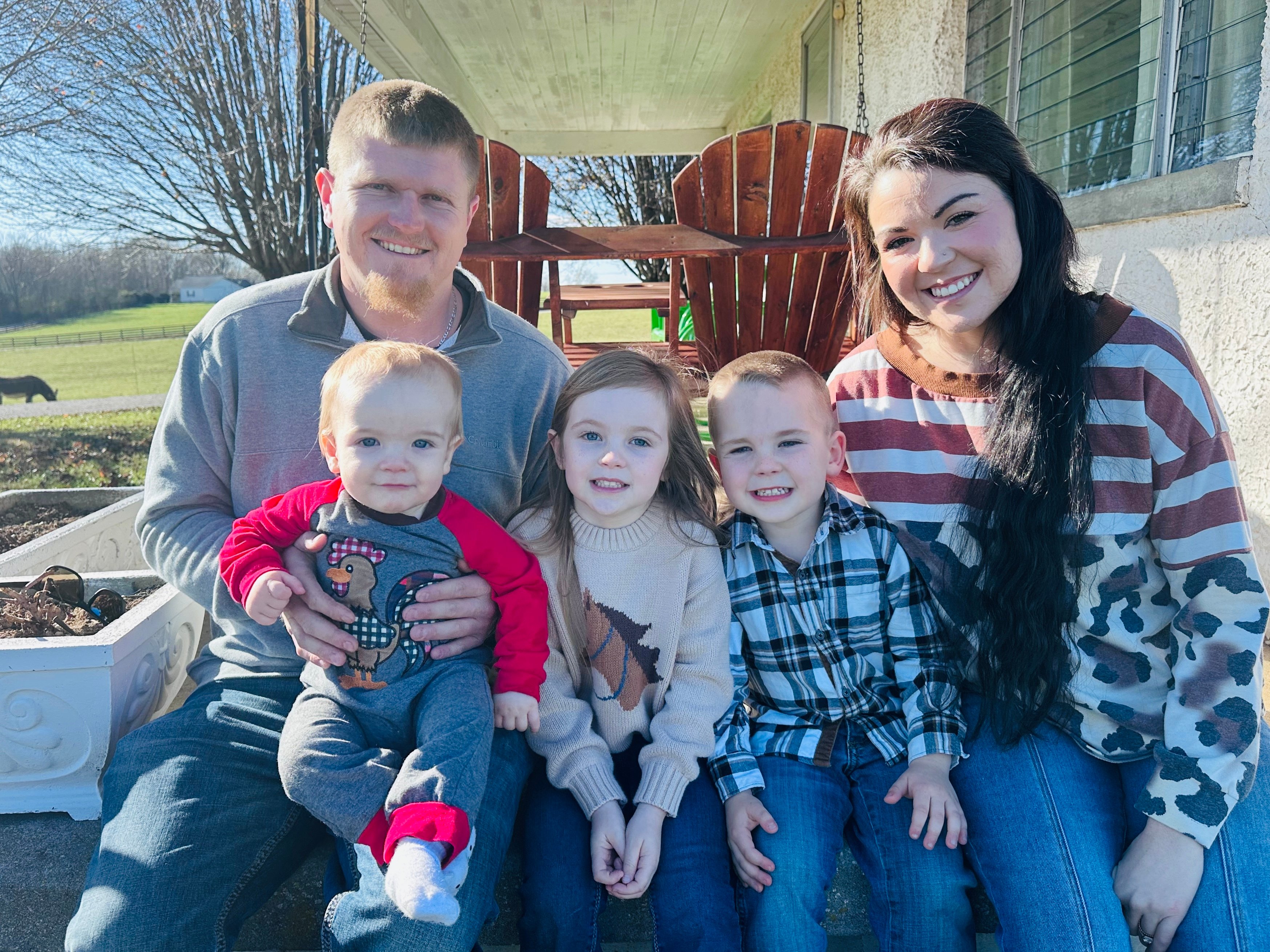
Through her vigilant reporting, Abbie Jasper is determined to change that mindset about tornado safety.
NOTE: This interview has been edited for length.
Last year, during an active tornado season, I was fascinated to learn about your weather reporting on social media. How did you get into that?
I work as the Pulaski County Weather Correspondent for The Storm Alert Center, based out of Russell Springs, Kentucky, which provides coverage to the Lake Cumberland and Green River areas. Daniel Wilson, the owner and lead forecaster, is my cousin and family friend. Upon sharing with him about my interest in weather, he took me under his wing and helped me learn all that I know today.
Tell me more about your interest in weather—have you always been fascinated by it?
I would call it a hobby for sure. As a child, I told everyone I wanted to be a meteorologist. My life directions changed with age, but my passion for weather never wavered in the least. It is a fascinating science that can be challenging to understand! I learn more each and every day. Daniel has guided me exponentially, and beyond that, I am self-taught.
How do you prepare yourself and your family for tornado weather on your farm?
The key to staying safe is to actively monitor weather outlets in the days prior to and on the day of any expected severe weather. In the days ahead of a severe weather event, you should prepare on your farm or country property by securing loose objects, closing up barns and outbuildings, and ensuring that your animals have shelter. Within your home, you must have a prepared storm “go bag” or supplies ready within your designated storm shelter.
Ideally, you should include:
-
Helmets for each family member
-
First Aid kit
-
Flashlights
-
Batteries
-
Battery weather radio
-
Bottled water
-
Simple non-perishable food items
-
Chargers and a power bank
-
Essential medications
-
Multipurpose tool (inc. a can opener)
-
Whistle
-
Blanket(s)
If you have children, you should have diapers/wipes, changes of clothes and any other needs for them.
Related reading: How to Prepare Your Farm or Homestead for a Hurricane
What should one do on the day of potential tornado weather?
On the day of a severe weather event, monitor weather outlets closely. Be dressed in tennis shoes or boots, and clothes acceptable for the elements.
Do not stay in a mobile home, weak structure or car. A storm shelter is the safest place to be, with a basement being second to that, and your lowest level interior room as a last resort.
If you get caught in your car with a tornado approaching, exit your car and lay flat in a ditch or lowest area you can find. A tornado can and will toss your car.
Are there particular weather apps, trackers and/or channels that you follow or might recommend?
Ideally, you’ll want to have a NOAA Weather Radio. This will not fail you with watches and warnings. Beyond that, choose other networks local to your location that will monitor weather conditions in your area. You should have multiple ways to monitor with radios, TV, phones and social media.
What do you have on hand to monitor storms in progress, especially if your power fails?
The NOAA Weather Radio. That is your non-negotiable! It has a battery backup.
It is also critical to keep your devices charged ahead of the severe weather event so you are able to monitor the weather with them as well. It is also important to make sure you are signed up for emergency alerts on your phone through your county's emergency management system. You can also download weather apps that will alert you to watches and warnings.
For me, I am fortunate to also have a Tornado Alert Device with battery backup. It reads atmospheric elements at their exact location and uses its incredible technology to alert you to lightning, non-severe storms, severe storms, tornado risks and tornadoes.
Is there a weather channel on a radio that you would recommend if WiFi is down?
I recommend tuning in to your local radio stations, especially any of your local stations with broadcast weather alerts! You can easily buy portable battery and AM/FM radios online and in box stores. I have one of those in addition to my stationary NOAA weather radio.
If someone doesn’t have a storm cellar or adequate indoor protection, what do you recommend they do to be as safe as possible on their farm?
Leave. Short but simple. If your location has no safe option, you need to leave when a tornado watch is issued. Do not wait until a warning is issued—that's how lives are lost. Storm safety relies on preparation.
What was it about last May’s tornado that tore through southern Kentucky that made it especially dangerous and unexpected?
Daniel and I were in constant contact and knew from watching model data and real-time radar data that it was going to be a bad night—we just didn't know exactly where and how bad. But model data ahead of time absolutely offered the ingredients needed for robust severe weather, including strong tornadoes.
We noted ahead of time the helicity tracks (rotating thunderstorm tracks) that presented a very distinct track from the path the storm followed that night. That very cell produced tornado warnings and severe thunderstorm warnings coming out of Missouri, into western Kentucky, into our area and east.
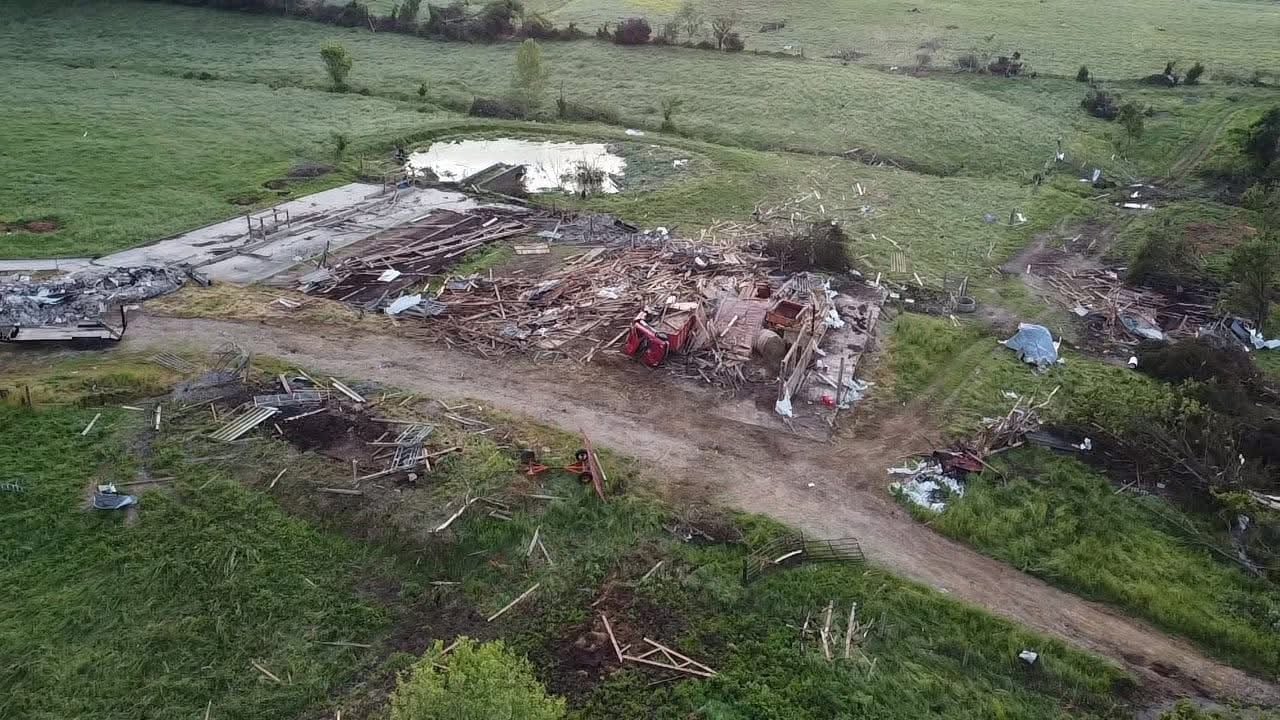
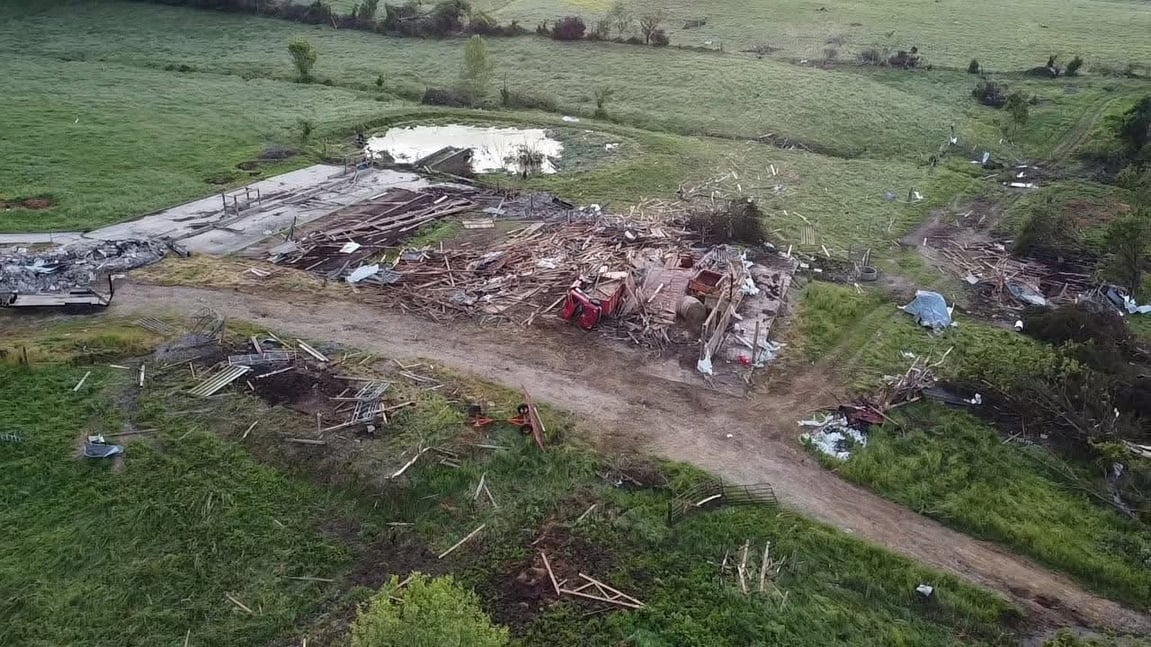
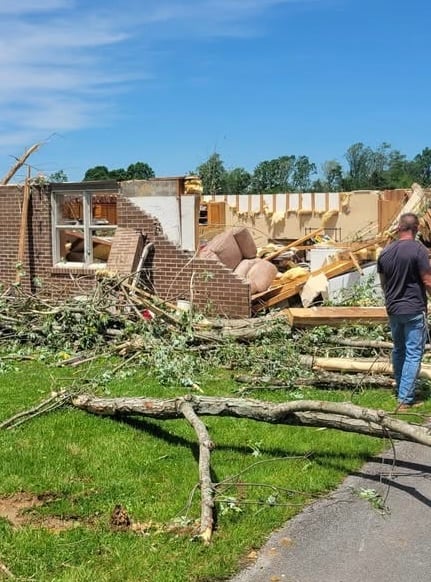
As it approached Russell County I called my family members and told them it was coming, and it was coming right for us. Our family farm in Russell County did in fact take a direct hit. Praise God, my Nana was safe, but I can never begin to explain the destruction it caused.
As it was impacting our farm, I was alerted to a family friend's home being demolished. I immediately called Daniel and told him that the tornado was on the ground, and we were the first media outlet to have that factual knowledge. He broadcasted that live in his coverage. We are both so thankful that we got that information out there.
From my house, about eight miles north of the storm, we could see the back side of the funnel and the incredible light show around it as it moved into south Somerset. There were constant flashes of green and the most insane lighting! When there were evident “power flashes,” I knew it was strong and I knew it was going to be a sad night. It impacted so many more families that we know. We tracked it all the way into eastern Kentucky.
[NOTE: The tornado ended in London, Kentucky—where it did the most damage and had the most loss of life—after 90 minutes on the ground.]
What weather variables (or “perfect storm”) does it take to produce a long-track tornado?
Instability, wind sheer, moisture and lift. The right amount of each of these and you have your “perfect storm”. Monitoring these “ingredients” on model data is key for meteorologists within the National Weather Service to issue the Severe Weather Outlooks that you see online: Marginal, Slight, Enhanced, Moderate and High.
Marginal and Slight severe weather outlooks are fairly common, but can absolutely still allow for severe weather. But once you get to “ Enhanced” and beyond, the severe weather coverage and its significance escalate.
Why do you think so many people are intrigued and obsessed by tornadoes, and what fascinates you about them?
Tornados are hard to understand, and with that brings fascination. We love what we cannot understand. Everyone “wants to see one” but that may change once you see what they can and will do.
Of course, a tornado is the very worst outcome of a thunderstorm, but for the average severe thunderstorm, what precautions should people take in their homes and farms?
Generally, your main issues in a severe thunderstorm are cloud-to-ground lightning and high winds. Staying indoors is the key to safety with both wind and lightning. Securing loose outdoor objects ahead of time is important.
I will also note that tornadoes can “spin up” even when not expected. So one must always stay on guard and monitor weather outlets during any kind of severe weather.
How has social media helped better warn or prepare people?
While social media has a lot of hype, meaning some outlets say it's going to be worse than it actually is, I believe social media's role in warning people is important. It is 2026, people don't want to just have radios, even though they should. However, most everyone has social media, and they use it constantly. So I do think that is key in ensuring that the largest audiences possible are being informed.
For more on storm-prepping in rural areas, check out the following articles:

Your email address will not be published. Required fields are marked*