




October
2026
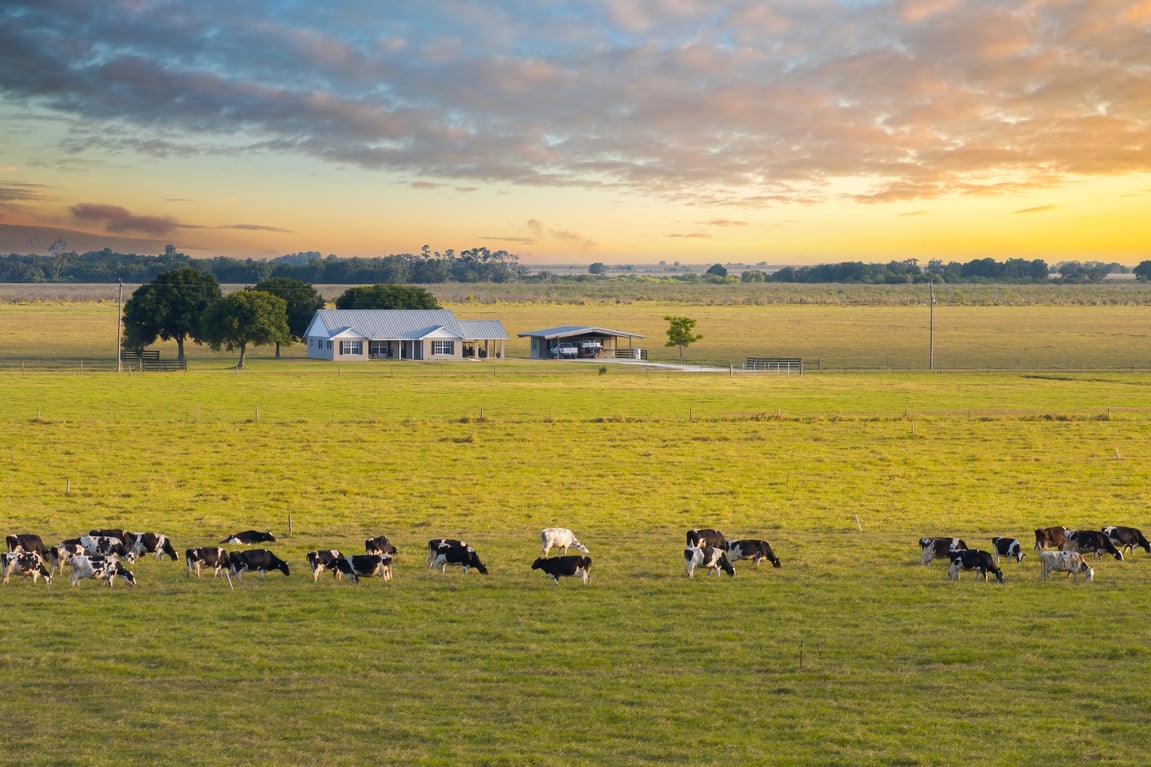
Rancher and conservationist Jim Strickland shares what landowners should consider before making a permanent conservation easement decision about their property. Jim Strickland learned early in life that land can disappear from a family surprisingly quickly.
Born into a Florida ranching family with roots dating to the 1800s, Jim grew up working cattle ranches with his father along Florida’s west coast. When Jim was 17, his father died suddenly.
“My father died, and there wasn't any estate planning in place,” Jim says. “We ended up selling every acre of land to pay back the lending institution.”
Jim didn’t give up ranching, though. He leased land for cattle and continued the way of life he had learned from his father. But losing both his father and the family land taught him early the importance of planning for the future. 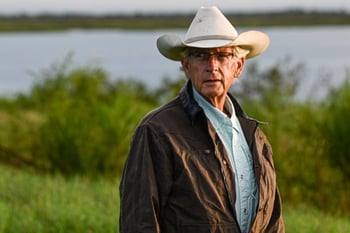
Today, Jim and his family own Strickland Ranch and Lost Girl Prairie Ranch in Florida. He is also managing partner of Big Red Cattle Company and Blackbeard’s Ranch and a co-founder of the Florida Conservation Group, which works with landowners on conservation agreements.
Over decades of ranching and conservation work, he has learned that protecting land is about more than simply keeping it undeveloped. It requires thinking carefully about what the land needs to do, what rights a family should retain and what choices should remain for the next generation.
Start With What You Want the Land to Do
This article covers the basics of conservation easements.
In short, a conservation easement is a legally binding agreement between a landowner and a third party, often a government entity or nonprofit land trust, that permanently restricts certain uses of the property to protect natural resources, wildlife habitat or agricultural land.
The landowner still owns the property and holds the deed. But ownership is often described as a “bundle of rights,” and a conservation easement allows a landowner to give up some of those rights, such as certain development rights, while retaining others.
For many landowners, those restricted rights have significant economic value, so a conservation easement can provide revenue while protecting the land from future development.
But before deciding whether an easement makes sense, Jim says landowners should start with a more fundamental question: What do you want this land to do?
For Jim, the answer was clear: he wanted to keep the land working as agricultural land, which shaped everything that followed, including which conservation partners he was willing to work with.
The Value Isn’t Always a Check
A conservation easement often involves a financial transaction: a landowner gives up certain development rights in exchange for compensation. That money can be important to a farm or ranch, helping keep an agricultural operation viable.
But Jim's experience shows that an easement's value doesn't always come in the form of a check.
“I negotiated an easement about 25 years ago that had nothing to do with getting money,” Jim says. “I traded an easement for 20-year grazing rights on acreage around me, which kept my ranch going as a viable entity.”
For Jim, conservation and economic viability weren't competing goals. The easement helped protect the land while giving his ranch access to the resources it needed to keep operating.
That kind of outcome requires thinking beyond the transaction itself. Before pursuing an easement, landowners should consider not only what they are willing to give up, but what they need the property to continue doing and what resources or opportunities could help make that possible.
For agricultural landowners, that may mean looking closely at which programs and conservation partners are available. In Florida, for example, Jim works with programs through the Florida Department of Agriculture, the Department of Environmental Protection, the federal Natural Resources Conservation Service and water management districts. Each has different conservation priorities, funding sources and requirements.
The key, Jim says, is finding an option that fits the landowner's goals as well as the conservation goals.
Don’t Give Away More Options Than You Mean To
Conservation easements aren't one-size-fits-all. Depending on the property, the easement and the parties involved, a landowner may be able to reserve certain areas or rights for future use.
Jim wishes more landowners understood just how important those choices can be. He and his wife recently bought land that was already subject to a federal conservation easement. The easement protects the property from development, but it also means they cannot build a house or barn on the ranch.
“My wife and I just bought a 1,300-acre ranch which already has a federal easement on it. And I wish the family who granted the easement would have kept just 100 acres out of the easement—unencumbered.”
That small piece of land could have given the family, and now Jim and his wife, more options for the future. Instead, they're looking for a smaller nearby parcel where they can build a structure that will make the ranch more functional as working land.
Jim approached his own homeplace differently. Because a conservation easement will outlast the person who creates it, he brought in the person who would eventually live with the decision.
“I sat down with my son, my heir, when he was 16 years old, to talk about our homeplace,” Jim says. “I told him, ‘I know and love the cattle business and I think I can make enough money at this to be worth it, but I want you to help me make this decision.’”
The conversation reflected two goals that shaped Jim's approach to the easement: keeping the ranch economically viable while leaving something stable for the next generation.
As a result of that conversation, Jim negotiated to retain the right to build one additional house on the property. It was a small but deliberate reservation—a future option for his family if circumstances changed. If he or his family ever needed to build another home, care for an aging family member or use the property in a different way, that option would still be available.
The goal isn't to preserve every possible option. It's to be intentional about which ones you're willing to give up—and which ones you want to leave for the people who come after you.
Choose Your Conservation Partner Carefully
Because a conservation easement is permanent, choosing a conservation partner is about more than finding an organization willing to hold the easement. The relationship can last for generations, so landowners should understand how a potential partner approaches its work and whether that approach fits the property and the landowner's goals.
For Jim, that means looking for an organization that understands more than conservation. Working agricultural land comes with its own needs and challenges, and the right partner should be able to understand the business of the land as well as its natural resources – what he calls being “farm or ranch friendly.”
He describes the approach at Florida Conservation Group, which he co-founded, this way:
“We can bring in licensed surveyors, soil scientists, wildlife biologists, grazing land managers and landscape-level conservation experts. If we need somebody, we pick up the phone or we have a Zoom call – we get the team together.”
Their multidisciplinary approach reflects a broader philosophy: conservation and a landowner's economic interests don't have to compete. Jim's organization helps landowners stay profitable while protecting the land and its conservation values.
For a landowner considering an easement, that means asking questions before choosing a partner. Does the organization understand your goals? Does it understand agriculture or other working uses of the property? What expertise can it bring to the table? How will it work with you when circumstances change?
A Permanent Decision Deserves a Deliberate One
Jim was 17 when his family sold every acre to settle a debt. Nothing about that outcome was inevitable. It happened because no one had planned for it.
A conservation tool is one among many for a family thinking about what happens to their land, and it isn’t the right tool for everyone. It also isn’t a substitute for an estate plan. But it is permanent, which makes it worth the same deliberate attention Jim gave that conversation with his 16-year-old son: not just what the land is worth today, but what the people who come after you can still do with it.
More on land ownership topics here:
Your email address will not be published. Required fields are marked*